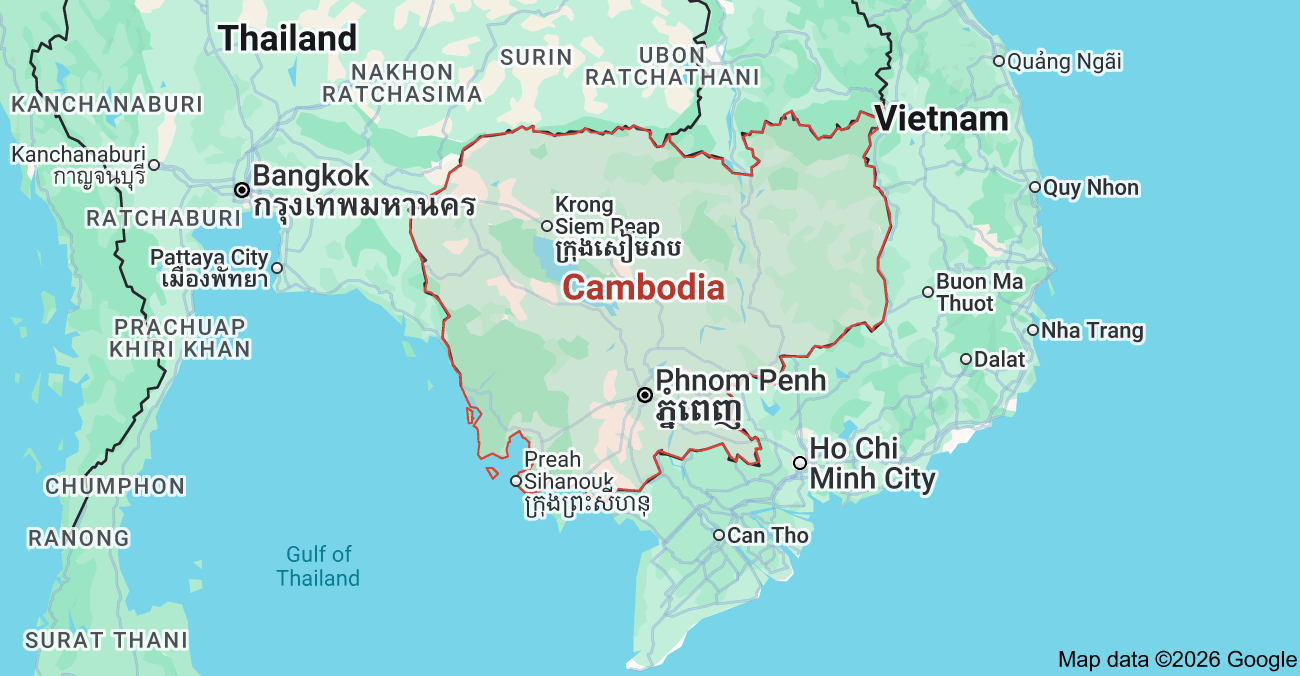
In 1975, Pol Pot and the Khmer Rouge seized control of Cambodia and tried to transform the state into a radical agrarian communist society. With extreme military power and no humanity, it emptied the cities and forced most of its citizens onto farms and labor camps. Over two million of its seven million population were killed in executions, starvation, disease, and exhaustion from forced labor. Another two million fled to neighboring countries. In 1979, Vietnam stepped up and ousted Pol Pot and his Khmer Rouge regime. Pol Pot went into hiding, and a guerrilla war took place until he died in 1998. It was an almost unspoken and forgotten holocaust.
Our trip to the country was in December 1997, the year before Pol Pot’s death. There was still sporadic fighting, and the streets in the capital, Phnom Penh, felt scary and unsafe. I questioned the wisdom of this trip several times while we were there.
I am almost embarrassed to publish these pictures on our webpage. It is again from our old website, and the quality is horrible. I hope that in the next year or so, we can return and replace this section with higher-quality pictures.
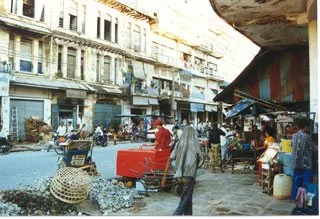
Phnom Penh is one of the few places
we visited where we felt frightened
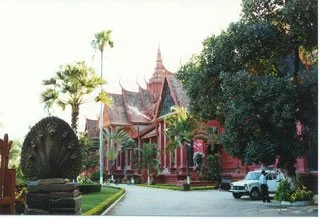
A museum in the capitol is home to
more bats than any other building in the world
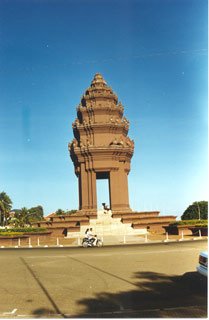
A new structure in a Cambodian
road roundabout.
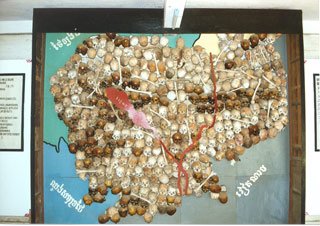
A map of Cambodia made from the skulls of some of the prison’s victims.
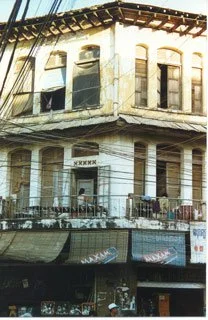
It was still in the aftermath of war, and there was very little beauty and charm.
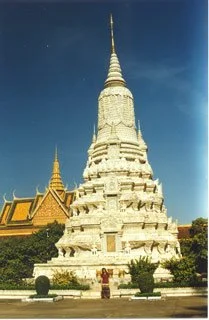
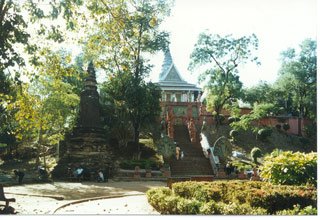
While most of the city was a crime/war zone,
this park seemed peaceful
However, there were some
historic sites worth visiting
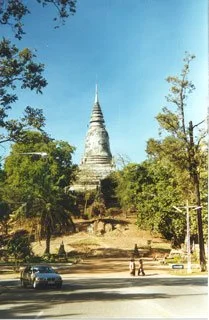
An old stupa in the
middle of the city
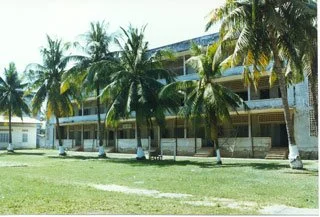
Toul Sleng (S-21), once a high school, was one of many torture and execution facilities. This prison was used to torture and kill over 20,000 people. It is now a Genocide Museum.
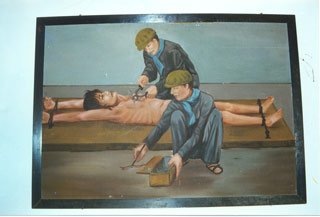
Horrific and very disturbing
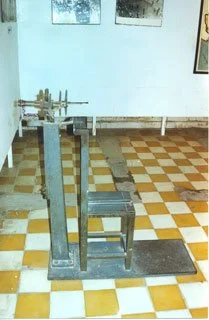
One of several torture devices.